


How to navigate trying a new medicine
Trying Chinese medicine for the first time may seem daunting if you don't have a guide to understand what's being done or why. Most Texans are accustomed to western medical doctors and the practice of being seen by a PA or a nurse in place of the doctor. This area is meant to impart to new or prospective patients what to expect when you visit Hopewell Medical Acupuncture Center. Below are also listed the definitions of the modalities we use in our practice.

Just the same as you fill out intake forms at your general practitioner, you'll do the same when you come to HMAC. Once we have everything filled out, one of our doctors of acupuncture and Chinese medicine will take you to a treatment room to do a full intake. These first visits can seem very time-consuming and detailed in how much information we are collecting regarding the whole patient - from head to toe - however the holistic approach to medicine requires we employ more than fifteen minutes to understand what is taking place in our patients. During this intake, we will observe the tongue and pulse of the patient, take vitals, and ensure we have a firm understanding of the reason for your visit. It's also during this time when we'll choose which modalities listed below are right for your condition.
Now for the part where most people have a hang-up about Chinese medicine: the needles. Acupuncture needles are dramatically finer than the hollow needles used for injections — typically about the thickness of a human hair (roughly 0.16–0.30 mm), while injection needles are several times thicker. Because they are solid and so slender, many patients feel little or nothing when the needle is inserted, often describing only a light pressure or a mild tingling rather than sharp pain. The common fear of intense discomfort is therefore unnecessary; most people are surprised by how gentle and barely noticeable the sensation actually is!


Acupuncture therapy is a traditional medical practice where thin, sterile steel needles are inserted into specific points on the body to relieve pain and improve overall health. In the view rooted in Traditional Chinese Medicine (TCM), the practice relies on pathways called meridians. Vital energy, known as "qi" (pronounced chee), flows through these pathways. Illness or pain can happen when this energy flow is blocked. Needling helps restore balance.
Western minds believe more that the practice as a way to stimulate nerves, muscles, and connective tissue. Studies suggest it may trigger the release of endorphins (the body's natural painkillers) and affect how the brain processes pain and stress.
Cupping therapy is an ancient alternative medicine technique that uses specialized cups to create suction on the skin. Originating thousands of years ago in Egyptian, Chinese, and Middle Eastern cultures, it is primarily used today by physical therapists, acupuncturists, and massage therapists to relieve muscle tension and manage pain. It has become immensely popular among athletes and celebrities. Remember the Olympic swimmer who had those round red marks on his back as he swam? This is a common side effect of this therapeutic modality.


Gua sha therapy is a traditional healing technique where a trained provider or individual uses a smooth-edged tool to stroke or scrape the skin to improve blood flow, release muscle tension, and promote healing.
Traditionally, "gua" means to scrape, and "sha" refers to the temporary red dots or redness that appear on the skin. Practitioners believe it moves blocked energy, or qi, to restore health.
In Western thought, the scraping motion acts as a tool-assisted massage or mechanical signaling therapy that increases microcirculation, supports lymphatic drainage, and loosens tight connective tissues.
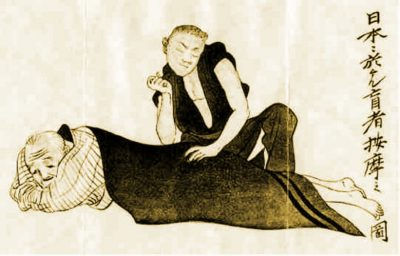
Tui na therapy is a traditional Chinese therapeutic massage and bodywork practice that uses manual hand techniques to stimulate specific acupoints and balance the flow of vital energy (Qi) in the body. "Tui" means to push, and "Na" means to lift, grasp, or squeeze. Rather than focusing purely on relaxation, it is used like acupuncture to treat specific patterns of disharmony, reduce pain, and restore health.
This is not your average massage visit. This is a Chinese therapeutic modality.

Chinese herbal medicine is a core component of TCM that uses plant, mineral, and animal-based substances to restore harmony and balance within the body.
Practitioners rarely use single herbs; instead, they combine multiple herbs into custom or traditional formulas designed for a person's specific pattern of symptoms rather than a single disease.
Herbs are processed and taken as powders, capsules, granules, or teas.